Reviewing the Muslim Doctor Character for Embroidery
As a designer who has spent years translating digital concepts into thread, I approach every new machine embroidery design with a mix of curiosity and caution. We have all been there: staring at a crisp digital preview, imagining how it will look on fabric, only to face the reality of puckering, thread breaks, or lost details once the needle hits the cloth. Today, I am taking a close look at the Muslim Doctor Character, a set of Illustrations and Graphics that promises versatility for various creative projects. My goal is not just to describe what it is, but to evaluate how it performs in the hands of an embroidery professional or a serious hobbyist.
First Impressions and Visual Personality
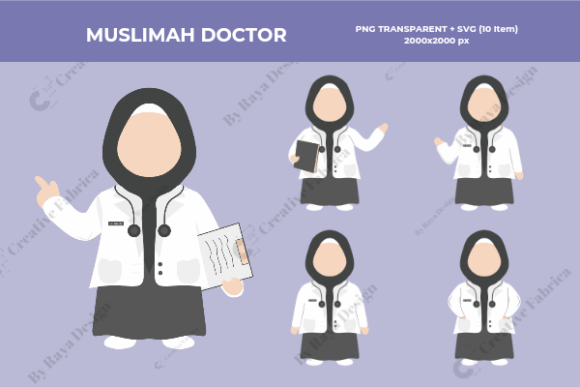
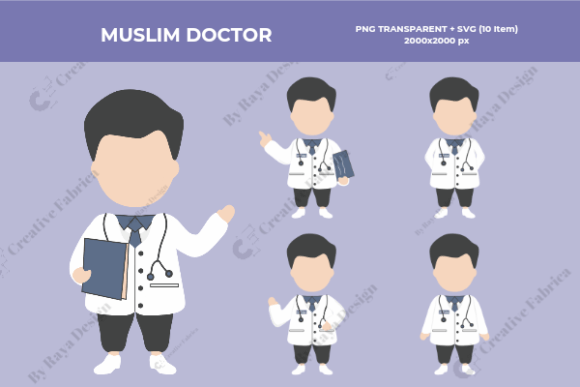
The first thing that strikes me about the Muslim Doctor Character is its clean, approachable aesthetic. In the world of custom apparel and personalized gifts, clarity is king. This design does not rely on overly complex shading or microscopic details that vanish under the weight of thread. Instead, it offers a strong silhouette and recognizable thematic elements. The mood is professional yet warm, making it an excellent candidate for projects that need to convey trust and care.
For embroidery designers, this visual simplicity is a double-edged sword. On one hand, it translates well to stitch; on the other, it requires careful handling to ensure it does not look flat. The character’s layout suggests it was originally created as vector art, given the inclusion of SVG files in the package. This is crucial because it means the lines are smooth and scalable. However, when we move from vector to an embroidery file, we must consider how those smooth curves translate into satin stitches or fill stitches. The design feels modern, fitting seamlessly into contemporary boutique branding or educational materials.
Real-World Application: The Custom Tote Bag Scenario
To truly test a design, I imagine it in a specific, real-life scenario. Let us say I am preparing a batch of custom tote bags for a local community health fair. These bags need to be durable, visually appealing, and quick to produce. The Muslim Doctor Character fits this brief perfectly. As a tote bag design, it serves as a central focal point. Because the character is distinct, it reads well from a distance, which is essential for promotional items.
In this context, I would likely use a combination of fill stitches for the larger areas of the character’s clothing and satin stitches for any outlines or smaller details like a stethoscope or badge. The transparency of the PNG files included in the folder allows me to place the character over different fabric colors in my digital mockups before I even thread the machine. This step is vital for checking contrast. If I were using a navy blue canvas bag, I would need to ensure the thread colors pop. A white or light gray thread might get lost if the character has light elements, so I would adjust the palette to include brighter accents.
Versatility Across Products
Beyond tote bags, this design shows promise for a wide range of handmade products. For sweatshirt embroidery, the character can be scaled up to sit prominently on the chest or back. The soft texture of fleece or cotton blend fabrics provides a good base for the stitches, allowing the design to sink in slightly without losing definition. For baby embroidery, such as on onesies or bibs, the gentle nature of the doctor character is appropriate. However, here I would exercise caution. Baby skin is sensitive, and bulky stitching can be uncomfortable. I would recommend using a lightweight stabilizer and possibly reducing the stitch density if the software allows, to keep the back of the embroidery soft.
The design also works well for embroidered patches. Patches require dense stitching to prevent fraying and to create a raised, premium look. The Muslim Doctor Character has enough solid areas to support this technique. Creating a patch allows for greater flexibility, as the end-user can iron or sew it onto jackets, caps, or bags later. This adds value for Etsy sellers who want to offer customizable options without embroidering every single garment individually.
Technical Considerations and Potential Pitfalls
While the design is versatile, it is not without its challenges. One major consideration is the hoop size. Since the product description mentions it is suitable for stickers and patterns, the original scale might be small. When enlarging it for a sweatshirt, you must check for pixelation in the PNG or distortion in the SVG. More importantly, you need to ensure your embroidery machine can handle the resulting stitch count. Although the exact stitch count is not provided, larger designs naturally require more thread and time.
Another critical factor is fabric texture. On textured fabrics like terry cloth towels or rough denim, fine details can get lost. The Muslim Doctor Character should be tested on scrap fabric first. If the design includes tiny text or very thin lines, these might break or merge together on coarse materials. I always advise running a test stitch-out on the same type of fabric and stabilizer you plan to use for the final product. This helps identify issues with stitch density and registration before you ruin a expensive garment.
Dark fabrics present another hurdle. If you are embroidering on black or dark navy, you may need to use a underlay stitch or a lighter thread color for the base layers to ensure the top threads stand out. The transparent PNGs are helpful here for visualizing the contrast, but nothing beats a physical test. Additionally, for stretchy fabrics like jersey knits used in t-shirts, a cut-away stabilizer is non-negotiable to prevent the design from distorting over time.
Commercial Viability and Branding
For craft business owners and small shop product creators, the commercial potential of this design is significant. It taps into niche markets such as medical professionals, Islamic community events, or educational settings. Using high-quality design assets like this can elevate the perceived value of your finished product. Customers associate clean, professional embroidery with quality and care. A well-executed Muslim Doctor Character can become a signature element of your brand, especially if used consistently across marketing materials and product lines.
However, licensing is a key area to verify. The product description states it can be used for patterns, beautifying objects, and stickers, and includes 10 items. It is essential to confirm whether the license covers mass production or if there are limits on the number of physical items you can sell. Always read the terms carefully before launching a new line of commercial embroidery products. If you are creating digital products, such as printable mockups or sublimation designs, ensure the license permits digital resale or redistribution.
Final Designer Notes
Before you commit to a large run, take these practical steps. First, inspect the SVG files in your vector software to clean up any unnecessary nodes. Second, digitize or convert the design with attention to stitch direction; following the contours of the character’s clothing will give a more polished look. Third, choose your thread colors wisely. Rayon threads offer shine, while polyester offers durability for items that will be washed frequently. Finally, remember that the Muslim Doctor Character is a tool. Its success depends on your skill in selecting the right fabric, stabilizer, and hoop size for each unique project. With careful preparation, this design can be a valuable addition to your library of embroidery project resources.