Reviewing Healthcare Medicine Glyph Icons for Stitch
As a designer who spends half my life digitizing and the other half stitching, I have learned that not every graphic translates well to thread. When I first pulled up the Healthcare Medicine Glyph Icons, my immediate reaction was one of cautious optimism. In the world of medical-themed embroidery, we often see designs that are either too cartoonish for professional use or so detailed they turn into a bird’s nest of broken needles on the machine. These icons, however, strike a different balance. They feel purposeful, clean, and modern.
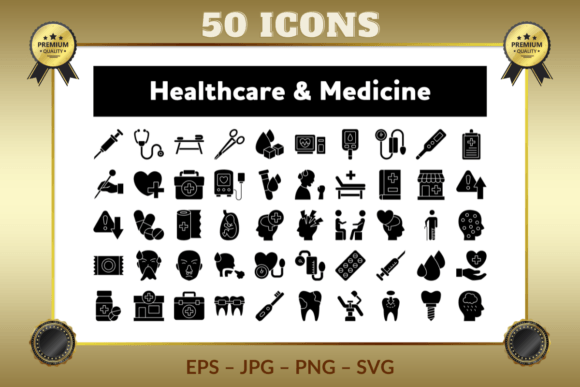
The visual personality here is minimalist but authoritative. The lines are crisp, suggesting a vector origin that respects negative space. For an embroidery project, this is crucial. Negative space allows the fabric to breathe, preventing that stiff, cardboard-like feel that plagues dense fill stitches. The theme covers essential medical imagery—Syringe, Stethoscope, Surgical Scissors, Heart Monitor, and specific health awareness symbols like Diabetes. This variety suggests a toolkit rather than a single-use asset, which is exactly what small business owners and crafters need when building a cohesive brand identity.
Real-World Application: The Clinic Tote Bag
To truly evaluate these graphics, I imagined a real-life scenario. A local nurse practitioner asked me to create a set of personalized gifts for her team during Nurse Appreciation Week. She wanted something subtle, professional, and durable. I chose to apply the Stethoscope and Heart Monitor icons from this collection onto heavy-duty canvas tote bags.
The result was impressive. Because the design relies on strong silhouettes rather than intricate shading, the machine embroidery design held its shape beautifully on the textured canvas. The satin stitch borders defined the edges sharply against the fabric weave, while the internal details used a sparse fill stitch that didn’t overpower the material. The clients loved them. They weren’t just cute; they looked like professional merchandise you might buy from a high-end boutique. This is the key value proposition of the Healthcare Medicine Glyph Icons: they elevate a simple handmade product into something that feels established and trustworthy.
Versatility Across Products
Beyond tote bags, I see these icons performing exceptionally well across a range of custom apparel and home goods. For sweatshirt embroidery, the bold lines of the Syringe or Surgical Scissors stand out clearly against fleece or cotton blends. The scalability mentioned in the product description is a major advantage here. Since these are fully layered and vector files, you can resize them without losing quality before converting them into your preferred embroidery file format.
For baby embroidery, such as onesies or burp cloths, the softer icons like the Massage Table or gentle health symbols work well. However, caution is needed. Baby skin is sensitive, and bulky stitches can be irritating. I recommend using a light fill stitch or even converting some of the simpler glyphs into a running stitch outline for these delicate items. This reduces the stitch density and keeps the finished product soft and flexible.
Etsy sellers and digital product sellers will find these assets particularly useful for creating printable mockups. The clean aesthetic photographs well, allowing you to showcase your embroidered patch or apron design in a professional light. Whether you are selling physical handmade products or digital embroidery files, the consistency of these icons helps build brand recognition.
Technical Considerations for Embroiderers
While the design is strong, practical application requires attention to detail. Here is how I approach these graphics in the studio:
- Fabric Texture and Contrast: These icons rely on shape recognition. On dark fabrics, ensure your thread colors have high contrast. A white or light grey thread on navy blue works perfectly. On textured fabrics like terry cloth towels, avoid tiny details. The Diabetes icon, for instance, has smaller elements that might get lost in high-pile fabric.
- Hoop Size and Placement: Always check your hoop size before digitizing. While the vectors are resizable, placing a large icon on a curved surface like a cap requires careful positioning. I recommend testing the design on scrap fabric first to see how the stabilizer interacts with the curve.
- Stitch Density: Vector files do not automatically dictate stitch density. As the designer, you must decide whether to use a satin stitch for thin lines or a fill stitch for larger areas. Over-densifying these simple glyphs will ruin the clean look. Keep it light.
- Small Details: Inspect the smallest icons, such as the specific markers for Diabetes or heart monitors. If you are stitching at a very small scale, some internal details may need to be simplified or removed to prevent thread breaks.
Commercial Viability and Brand Trust
For commercial embroidery projects, professionalism is paramount. Using clipart that looks amateurish can undermine customer trust. The Healthcare Medicine Glyph Icons offer a level of polish that reassures buyers. When a customer sees a cleanly stitched stethoscope on a lab coat or a tote bag, they perceive quality. This perception drives buyer engagement and justifies higher price points for your handmade product.
However, always confirm licensing before selling finished items or digital products. The product description states these are editable and scalable, which is excellent for customization, but you must verify if the license covers commercial use for physical goods versus digital resale. Never assume. Check the terms provided with the download.
Final Designer Notes
Before committing to a large run, test the design in black and white mockups. This strips away the distraction of color and reveals whether the shapes are distinct enough. Compare how the icons look on light versus dark fabric backgrounds. Use proper stabilizer—cut-away for stretchy fabrics like t-shirts, and tear-away for stable woven fabrics like aprons or pillow covers.
The Healthcare Medicine Glyph Icons are a solid addition to any embroidery designer’s library. They are not just decorative; they are functional communication tools. Whether you are creating holiday embroidery for hospital staff, personalized gifts for healthcare workers, or branding for a small shop product, these icons provide the clarity and style needed to succeed. They respect the medium of embroidery, avoiding unnecessary complexity while delivering strong visual impact. For the serious crafter or business owner, they are a reliable choice for creating professional, memorable finished products.